
The Young Republic Needed Educated Citizens
The Founders Feared an Ignorant Public and Ignored Segments of the Population

Part 1 of Thomas Jefferson’s party
Founding premise: self-government requires educated citizens
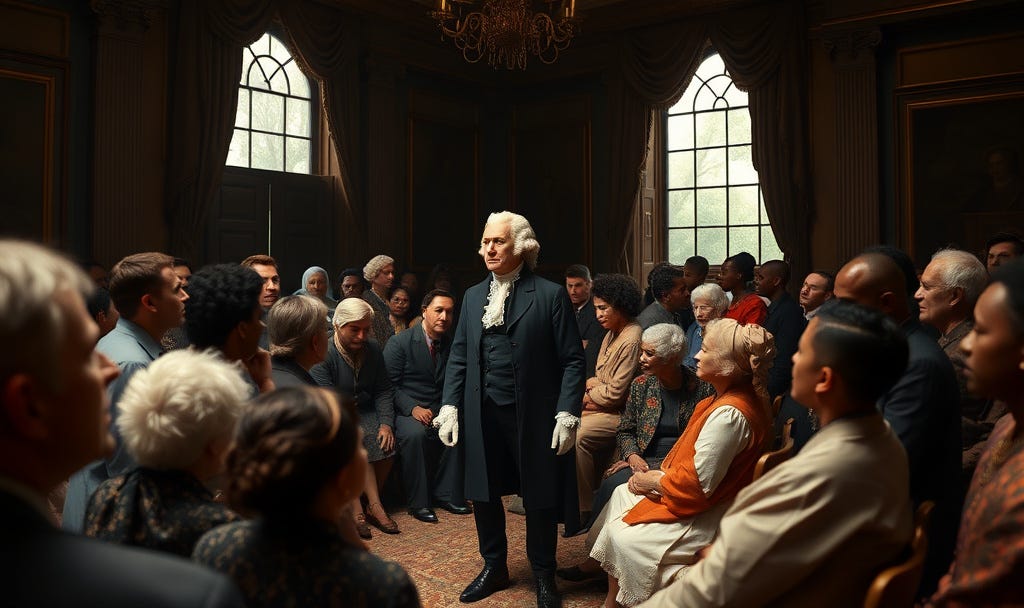
Thomas Jefferson started the conversation. Most of the founders agreed with him. “If a nation expects to be ignorant and free, in a state of civilization, it expects what never was and never will be.”
When Jefferson’s “Bill for the More General Diffusion of Knowledge” came up for a vote in the Virginia Assembly, the assemblymen scoffed at the notion of educating farmers.
One state legislator said: “It is a great mistake to suppose there is more knowledge or utility in philosophy than in agriculture or mechanical arts. Take away the food of man and his existence would be gone. Take away his philosophy, and he would scarcely know it was gone.”
Over the years, Jefferson’s bill for public education came up three times and was always voted down. In frustration he replied: “People have more feeling for canals and roads than for education.”
James Madison knew the limits of uneducated self-governance: “a popular Government, without popular information, or the means of acquiring it, is but a Prologue to a Farce or a Tragedy; or perhaps both.”
One man stood on the side of the room. It was Paul Jennnings, Madison’s manservant. The irony of his silence is painful. Here was a man who had quietly learned to read and write in Madison’s highly educated household where he was born, yet, as an enslaved person he could not contribute to the conversation about education.
Even though John Berry Meachum had been born enslaved, he was not afraid to speak. He argued that “the way to lift his people out of oppression was to educate them.” John Fields, another formerly enslaved man, put it simply: “Our ignorance was the greatest hold the South had on us.” Susie King Taylor was born enslaved in 1848 and reminded everyone that her education in an underground school included wrapping their books in paper “to prevent the police or white persons from seeing them.”
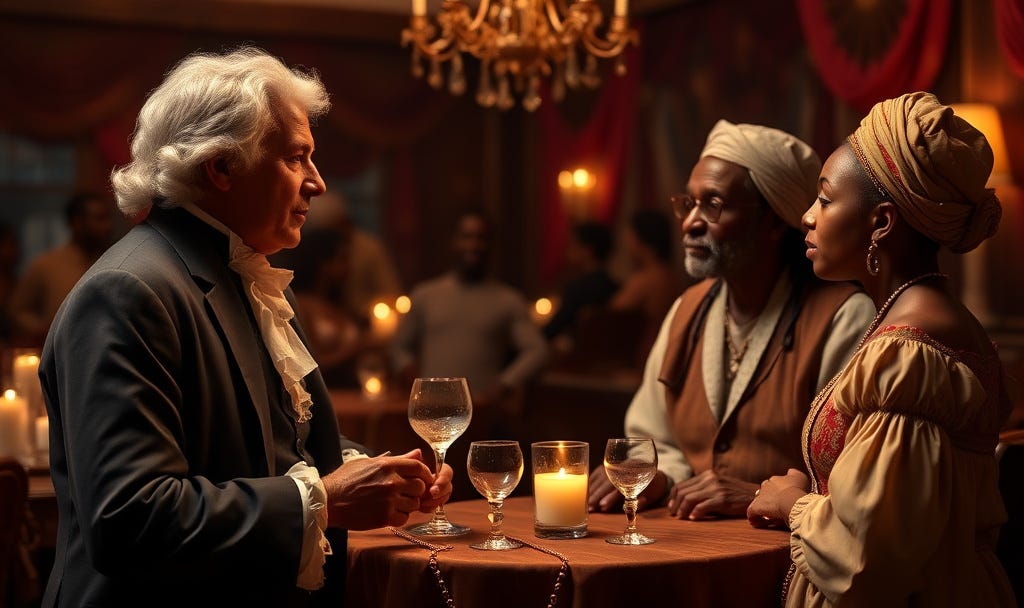
Elias Caldwell, prominent Washington, D.C. lawyer and the Clerk of the US Supreme Court from 1800-1825, argued openly against educating people who were being held in bondage: “The more you improve the condition of these people, the more you cultivate their minds, the more miserable you make them in their present state. No, if they must remain in their present situation, keep them in the lowest state of degradation and ignorance.”
George Washington spoke up about knowledge in a successful democracy. “The common education of our youth from every quarter well deserves attention. In a republic what species of knowledge can be equally important and what duty more pressing on its legislature than to patronize a plan for communicating it to those who are to be the future guardians of the liberties of the country?”
Benjamin Rush believed that education was the essential foundation for a stable and lasting republic and wasted no time expounding on his educational beliefs. “Freedom can exist only in the society of knowledge. Without learning, men are incapable of knowing their rights.”
Everyone involved, on every side of the proposition filling that room, understood that education and freedom were inseparable.
There is a tension at the heart of republican self-governance that thinkers have wrestled with for centuries: freedom requires participation, and participation requires knowledge. Alice Walker said it best: “The most common way people give up their power is by thinking they don’t have any.”
Jefferson put it plainly: “The republic doesn’t fall to tyrants so much as it drifts toward them, carried by the current of uninformed consent.”
As the party progresses, there is another side worth noting. There is danger in manufactured knowledge and a citizenry that believes it is informed while actually being managed. That may be the subtler threat. True republican freedom demands not mere access to information, but citizens possessing habits of mind to seek truth.
Thomas Jefferson had more things to say about the importance of education in a democracy: “Every government degenerates when trusted to the rulers of the people alone. The people themselves, therefore, are its only safe depositors. And to render even them safe, their minds must be improved to a certain degree.”
Jefferson concluded: “wherever the people are well-informed, they can be trusted with their own government.” “Educate and inform the whole mass of the people. They are the only sure reliance for the preservation of our liberty.”
____________________________________________________________________
This is Part 1 in a five part series about the relationship between a successful and sustainable democracy and a well-supported public school system. What happened when the country expanded? Some people thought that schools should teach obedience and others thought the purpose of education was to promote agency. Stay tuned to find out more.
II. When Democracy Expanded, Public Schools Expanded
III. Democratic Localism, Professionalism, and School Governance
IV. Rights, Courts, and Democratic Tension
V. Most Civic Questions Continue Today
The founders promoted education but schooling was reserved for a few. What do you think about that?
Love this conversation. Absolutely spot on. Including the last bit about discerning the truth, and not swallowing manufactured 'truth' just because the 'right' people said so.
Hit the nail on the head.. A state drifts towards tyranny through uninformed consent. Yet the 'elites' use power, money, and influence to engineer this. How to reverse? Most people are either too stupid, uninterested, or distracted by circuses to see the takeover.